
Most people have never heard of fascia or fascia training. Even fewer train it deliberately.
That is a problem — because fascia is involved in almost every injury, every movement restriction and every case of chronic tension that athletes deal with over the course of a training career. This is not a new concept in elite sport. Physiotherapists, osteopaths and performance coaches have worked with fascial tissue for decades. What has changed is that the research has caught up, and the tools are now accessible to anyone who trains regularly.
If you have ever felt stiff despite stretching consistently, or experienced tightness that never quite resolves — there is a reasonable chance fascia is involved. This guide explains what it is, why it matters and what to actually do about it.
What Is Fascia?
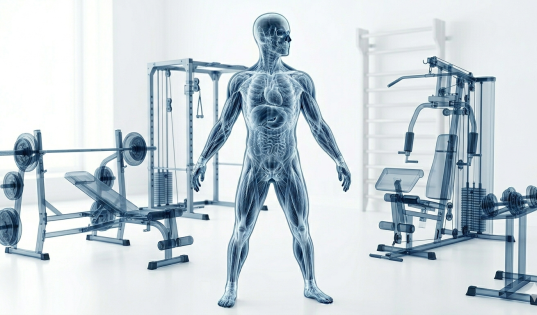
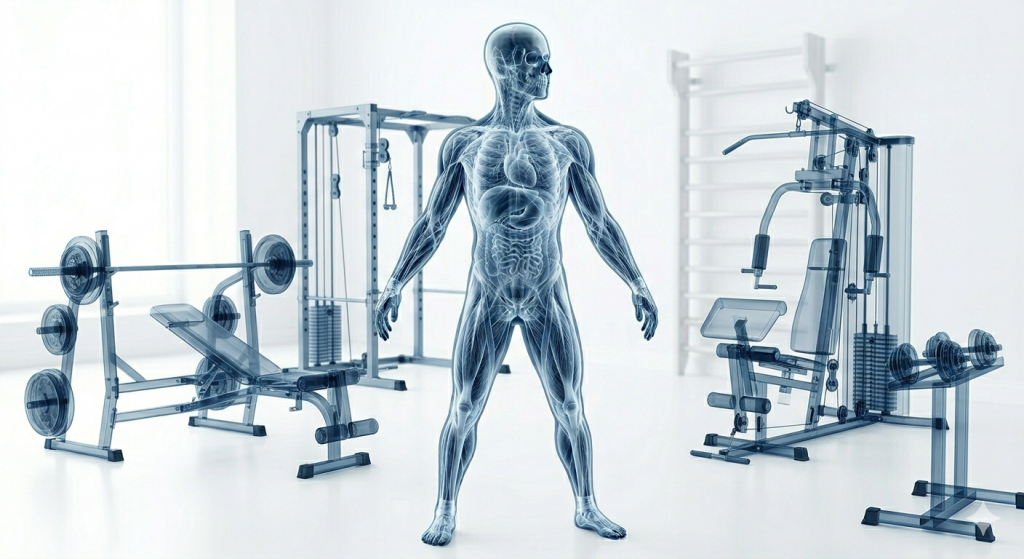
Fascia is connective tissue. It runs through your entire body — surrounding every muscle, bone, organ and nerve — in a continuous, uninterrupted web.
The easiest way to picture it: take a raw chicken breast and pull back the skin. The thin, white, slightly translucent layer underneath — that is fascia. Now imagine that same material running through everything in your body, connecting structures that conventional anatomy diagrams treat as completely separate.
When it is healthy, fascia is pliable, well-hydrated and allows structures to glide smoothly against each other. When it becomes restricted — through repetitive loading, poor movement patterns, dehydration or injury — it thickens, adheres and starts pulling on everything around it.
This is why a tight hip can cause knee pain. Why shoulder restriction affects your lower back. Why foam rolling your calves can release tension in your hamstrings. The tissue is connected. Treating it in isolation often misses the point.
What Is Fascia Training?
Fascia training is any practice that deliberately targets the health and function of fascial tissue — rather than just the muscles it surrounds. The distinction matters because conventional training — sets, reps, isolated muscle work — does very little for fascia. You can have strong, well-developed muscles wrapped in restricted, dehydrated fascial tissue. Many athletes do. The result is a body that looks capable but moves poorly and recovers slowly.
Fascia training works differently. It uses:
Sustained pressure — foam rolling or massage ball work held for long enough to actually affect the tissue. Not 10 seconds. Closer to 90.
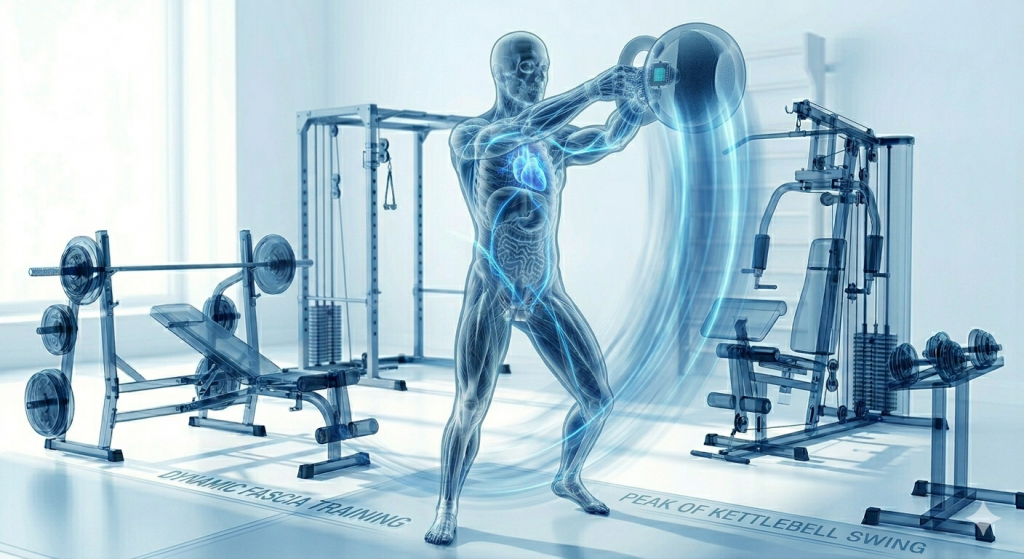
Elastic, spring-like movement — skipping, bounding, plyometric work that loads the fascia’s natural recoil capacity rather than just the muscle’s contractile ability.
Three-dimensional movement — fascia runs in multiple directions simultaneously. Training that only moves in straight lines — most gym work — loads only part of the network.
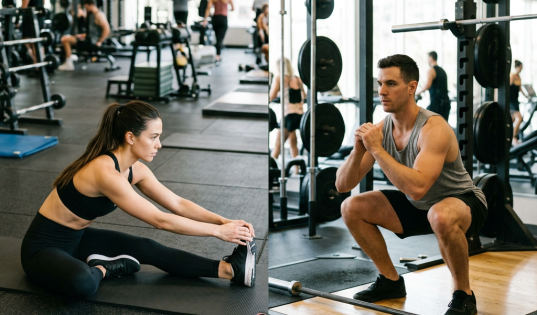
Slow, sustained stretching — holding positions long enough for the tissue to respond. Fascia is viscoelastic — it changes shape under sustained load, but only if you give it time.
What the Research Actually Shows
The science here is worth knowing — not because you need to cite papers in your training log, but because it changes how you approach recovery.
Dr Robert Schleip at the Fascia Research Project in Germany has spent two decades studying fascial tissue. His work established something that changed how performance coaches think about movement: fascia is not passive. It contains smooth muscle cells. It actively contracts. It responds to stress, changes its structure over time and communicates with the nervous system in ways that directly affect how you feel and move.
The Fascia Research Society — the international body that brings together researchers, clinicians and movement professionals — has documented that fascia contains more sensory nerve endings than muscle tissue. This means restricted fascia does not just limit your range of motion. It directly impairs your proprioception — your body’s ability to know where it is in space. Athletes with restricted fascia move less accurately and are at higher injury risk, independent of their strength levels.
On the practical side, research published in sports medicine journals consistently shows that myofascial release — systematic foam rolling and manual therapy targeting fascial tissue — reduces delayed onset muscle soreness, improves joint range of motion and accelerates recovery between training sessions when applied consistently.
The key word is consistently. One foam rolling session does nothing meaningful. Four weeks of daily work starts to change the tissue.
Why Athletes Ignore It — And Why That Is a Mistake
The honest reason most athletes skip fascia work is that it is uncomfortable, it takes time and the results are not immediately visible.
Muscle training gives you feedback you can measure — weight on the bar, reps completed, times recorded. Fascia training gives you feedback that is harder to quantify: you move better, you recover faster, chronic tension you had accepted as normal starts to ease.
That feedback delay is why most people stop before the tissue actually changes.
The athletes who stick with it — particularly in disciplines with high rotational demand like boxing, MMA and yoga, or high repetitive loading like swimming and weightlifting — consistently report that it was one of the higher-value changes they made to their training routine. Not because it is dramatic, but because everything else works better when the connective tissue is functioning properly.
Fascia Training vs Stretching — What Is the Difference?
This is worth clarifying because the two are often conflated.
Stretching — the kind most people do — targets muscle fibres. It works by taking a muscle to its end range and holding or pulsing through that range. Done well, it improves flexibility. Done poorly, it achieves almost nothing.
Fascia training targets the connective tissue that surrounds those muscles. The techniques are different, the hold durations are longer and the mechanisms are distinct.
| Fascia Training | Conventional Stretching | |
|---|---|---|
| Target tissue | Fascial network | Muscle fibres |
| Hold duration | 90 seconds minimum | 15-30 seconds |
| Movement type | Sustained, elastic, 3D | Linear, isolated |
| Recovery benefit | High | Moderate |
| Tools used | Foam roller, massage ball | Body position only |
The practical answer: do both. They complement each other. A mobility routine that includes genuine fascial work alongside conventional stretching will outperform either approach alone.
Most people foam roll for about 20 seconds per area and wonder why nothing changes. Fascia responds to sustained load — the research suggests a minimum of 90 seconds at a given point before the tissue begins to release. Find the area of tension, hold your weight on it, breathe through the discomfort and wait. The release you feel after 90 seconds is the tissue actually responding — not just your pain tolerance increasing.
How to Start — A Practical Protocol
You do not need a coach or specialist equipment to begin. A foam roller and a lacrosse ball cover the majority of what most athletes need.
After every training session — 10 minutes:
Work through the major muscle groups you just used. Spend 90 seconds minimum on each area. Move slowly. When you find a point of tension — a spot that feels noticeably more restricted or uncomfortable — stop there and hold rather than rolling back and forth continuously.
For most training sessions this means: quads, hamstrings, glutes, calves, upper back. Five areas, 90 seconds each, done consistently.
On rest days — 20 minutes:
A fuller body sequence. Add hips, thoracic spine, shoulders and the sides of your body — the lateral fascial lines that most athletes never address. Follow the rolling with 5-10 minutes of slow, elastic movement: light skipping, arm circles, gentle spinal rotation. This rehydrates the tissue after the compression work.
Before training — 5 minutes:
Light foam rolling of the muscles you are about to load. This activates the fascial network, improves the neuromuscular connection to those areas and reduces the risk of restriction patterns affecting your movement under load.
The session order matters: compress first, then move. Compression releases restriction. Movement rehydrates. Both together is significantly more effective than either alone.
Which Disciplines Benefit Most
Every discipline benefits. But some see more immediate and obvious results.
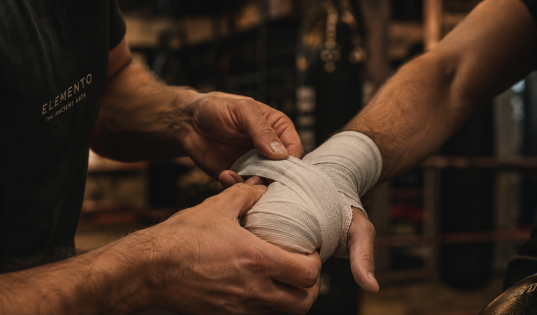
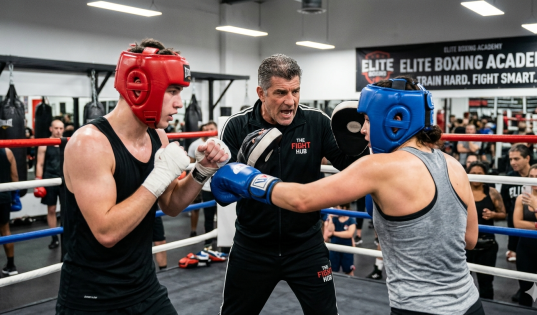
Striking sports create significant fascial restriction in the hips, thoracic spine and shoulders through repetitive rotational loading. Most boxers carry chronic tension in these areas and accept it as normal. Regular fascial work in the thoracic spine and hip flexors directly improves rotation, which improves striking mechanics — often more than additional technique work at the point where restriction is the limiting factor.
These disciplines already work with fascial principles in many respects — sustained holds, three-dimensional movement, breath-led tissue release. Sports therapy coaches who combine explicit fascial work with yoga or Pilates practice report faster progress in mobility and significantly better results in clients with chronic tension patterns.
Weightlifting and calisthenics
Heavy loading compresses fascial tissue over time. Without regular release work, lifters accumulate restriction that limits range of motion in key positions — the bottom of a squat, the overhead position, hip hinge depth. Foam rolling between sessions maintains the tissue quality that allows you to keep training at intensity without movement degradation.
The full body nature of swimming loads the entire fascial network. Shoulder restriction is particularly common in swimmers and responds well to targeted upper back and thoracic work. Hip fascial restriction affects kick mechanics in ways that strength work alone does not resolve.
Are you a Personal Trainer or a fitness coach ? Get your free profile today. Get found in your area.

Find qualified coaches near you on Elemento — search
by discipline, location and coaching style.
What is fascia training?
Fascia training refers to movement and manual therapy practices that target the connective tissue surrounding your muscles, bones and organs. It includes myofascial release techniques like foam rolling, elastic rebound training and sustained stretching — all designed to improve the health, mobility and resilience of the fascial network rather than just the muscles within it.
Does fascia training actually work?
The research is clear that myofascial release improves range of motion, reduces delayed onset muscle soreness and supports faster recovery between sessions when applied consistently. The Fascia Research Society and multiple peer-reviewed studies confirm that fascial tissue responds meaningfully to sustained loading and release techniques.
How often should I do fascia training?
Ten minutes after every training session is a practical baseline for most athletes. Adding a fuller 20-minute sequence on rest days accelerates the results. The consistency matters more than the duration — daily short sessions outperform occasional long ones for fascial health.
What equipment do I need?
A foam roller and a massage ball are sufficient for most athletes starting out. More advanced work uses textured rollers and therapy balls of varying densities to reach different tissue layers. No equipment is needed for elastic rebound and movement-based fascial work.
Is fascia training the same as foam rolling?
Foam rolling is one method of fascial release — but fascia training is broader. It also includes elastic movement training, sustained stretching techniques, hydration practices and manual therapy performed by qualified sports therapists. Most athletes start with foam rolling and expand their practice from there.
Can fascia training help with chronic pain?
Research supports the use of myofascial release for chronic pain — particularly in the lower back, hips, shoulders and neck. Many chronic pain presentations have a significant fascial component that muscle-focused treatment misses entirely. For persistent pain, working with a qualified sports therapist who understands fascial anatomy is recommended alongside self-practice.
About the author
Francesco Gallo founded Elemento Fitness and is a qualified personal trainer with more than 20 years of experience in martial arts, weightlifting, and calisthenics.
He started his journey doing karate since he was 4 years old. He then competed in boxing, kickboxing, and strength sports before becoming an instructor. A personal loss changed his focus from performance to long-term health and well-being, which led him to build Elemento.
Elemento combines old knowledge with new training to bring together physical, mental, and emotional health through the four natural elements. “True fitness goes beyond the physical,” Francesco says. “It’s about being able to adapt, master something, and grow as a person.”
Francesco leads Elemento’s mission to make excellent coaching accessible across the UK and to support fitness professionals in building sustainable, successful businesses.