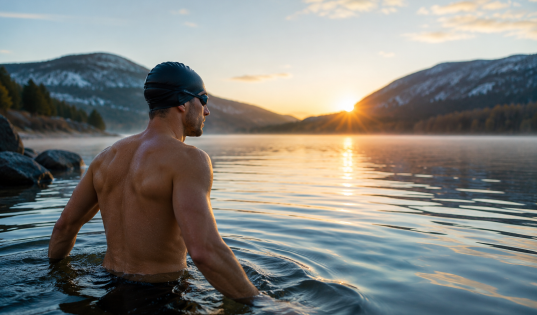
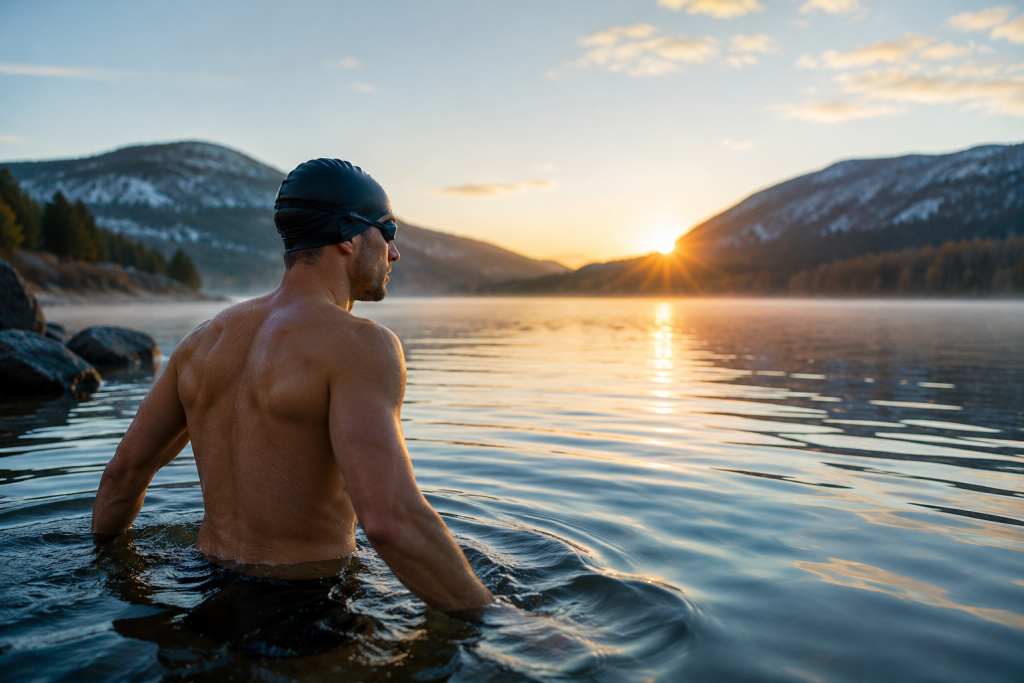

Most people who try cold water swimming describe the same thing afterwards. A clarity of mind that lasts for hours. A physical energy they did not expect. A strange compulsion to do it again.
That description sounds like marketing copy — but the science explains it precisely. Cold water immersion triggers a cascade of neurochemical responses that most other forms of exercise simply cannot replicate. And the UK, with its rivers, lakes, lidos and coastline, is one of the best places in the world to access it.
This guide covers everything you need to know — the real benefits, the honest risks, how to start safely as a complete beginner and what kit actually makes a difference when you get in the water.
Why Cold Water Swimming Has Taken Over the UK
It started quietly. A few people swimming in the Serpentine in January. Outdoor lido memberships selling out in February. Then it became something else entirely.
Cold water swimming — also called wild swimming, open water swimming or cold water immersion depending on who you ask — is now one of the most searched fitness activities in the UK. It has moved from niche pursuit to mainstream wellness practice in the space of a few years, driven by a combination of genuine scientific interest, social media visibility and the particular appeal of doing something that feels simultaneously difficult and free.
Part of the appeal is the simplicity. You do not need a gym membership, a personal trainer or specialised equipment to start. You need water and the willingness to get in.
But the people who stick with it are not doing it for simplicity. They are doing it because it works — and the evidence for that is more solid than most fitness trends can claim.
What Actually Happens to Your Body When You Get In
The moment cold water makes contact with your skin, your body responds immediately and dramatically.
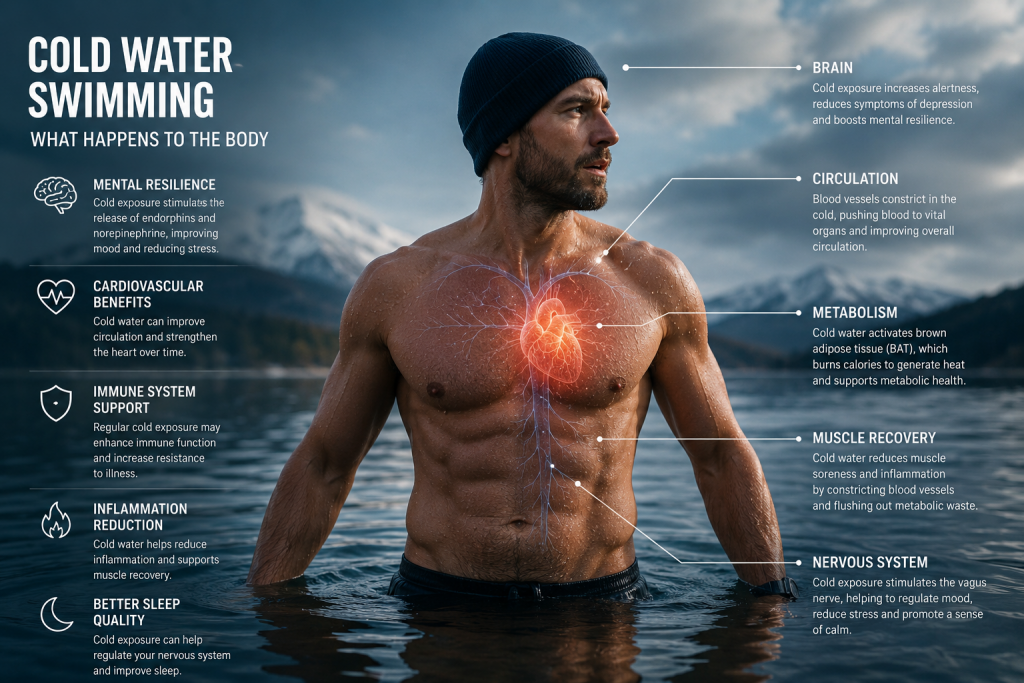
Your blood vessels constrict at the surface, redirecting blood flow to protect your vital organs. Your heart rate changes. Your breathing accelerates involuntarily — the cold shock response — before your nervous system begins to adapt. Stress hormones surge. And then, as you settle into the water and the initial shock passes, something more interesting begins.
The neurochemical response to cold water immersion is measurable and significant. Research published in peer-reviewed journals has documented that cold water immersion at 14°C produces a 250% increase in dopamine and a 530% increase in norepinephrine — the neurotransmitters responsible for mood, motivation, alertness and focus. These elevations are not brief. They persist for several hours after you leave the water.
This is the physiological basis for what cold water swimmers describe as the post-swim high. It is not subjective. It is happening in the brain, and the research documents it consistently.
Beyond the neurochemical response, the physical effects include improved circulation as blood returns to the surface vessels during rewarming, reduced inflammation through vasoconstriction, activation of brown fat cells which burn energy at a higher rate than white fat tissue, and — with regular practice over weeks and months — measurable improvements in the body’s antioxidant defence systems.
The Mental Health Benefits — And the Science Behind Them
The mental health case for cold water swimming is the one that tends to stop people mid-scroll — because the data is striking.
Studies consistently show that regular cold water swimming reduces anxiety and depression symptoms, improves mood and builds what researchers describe as stress resilience — the capacity to recover from acute stress more efficiently, a quality that transfers directly to everyday life.
According to the Physiological Society, the cold shock response that initially makes entering cold water feel difficult is precisely what drives the mental health benefit. The surge in dopamine and serotonin triggered by cold water contact is part of what creates the post-swim high — and regular exposure appears to train the nervous system to handle stress with less reactivity over time.
A study often cited by practitioners found that 95% of people with depression and over 98% of people with anxiety reported a reduction in symptoms after regular outdoor swimming. These are not laboratory numbers — they are self-reported outcomes from real participants — but they align with what the neurochemical research would predict.
The social dimension matters too. Cold water swimming in the UK has developed a strong community culture. Groups meet at lidos, rivers and coastal spots. The shared experience of doing something difficult — and the conversation afterwards, usually over something hot — has its own mental health value that is separate from the water itself.
The first 30 seconds are the hardest part — and
deliberately so. The cold shock response that makes
you want to get out immediately is your nervous system
responding to a stimulus it does not recognise as safe.
Do not fight it. Control your breathing instead.
Slow, deliberate exhales. Within 90 seconds your
breathing steadies, the shock passes and the body
begins to adapt. Everything changes after those
first 90 seconds. Getting out before them means
missing most of the benefit.
Cold Water Swimming for Athletic Recovery
Elite athletes have used cold water immersion as a recovery tool for decades. Ice baths after intense training sessions are standard practice across professional sport — from Premier League football to Olympic athletics. Cold water swimming offers the same physiological mechanism in a more accessible, arguably more enjoyable form.
The recovery mechanism works through vasoconstriction and the subsequent rewarming response. Cold water causes blood vessels to contract, which reduces swelling and limits the inflammation response in loaded muscles. When you exit the water and your body begins to rewarm, blood returns to these areas carrying oxygen and nutrients that accelerate the repair process.
The result: reduced delayed onset muscle soreness, faster return to training readiness and — with consistent use — improved adaptation to training load over time.
For athletes training in disciplines that demand high volume or frequent sessions — boxing, MMA, swimming, weightlifting, calisthenics — cold water immersion is one of the higher-value recovery tools available. It costs nothing if you have access to open water, requires no equipment beyond appropriate swimwear and produces measurable effects after a single session.
The one caveat worth knowing: cold water immersion immediately after strength training may slightly blunt muscle hypertrophy adaptations if applied too soon and too frequently. For recovery between sessions or after competition, the benefits are clear. For daily use immediately post-strength training, some periodisation is worthwhile — a topic worth discussing with a qualified coach if performance is the primary goal.
How to Start Safely — A Beginner’s Protocol
The most important rule in cold water swimming is also the simplest: never swim alone. This applies regardless of your experience level, the location or the temperature. Cold water swimming carries real physiological risk — cold shock, hypothermia, swim failure — and the presence of another person is the difference between a manageable incident and a serious emergency.
Beyond that non-negotiable, here is a practical protocol for beginners:
Week 1-2 — Acclimatisation at home Before entering open water, begin with cold showers. End your normal shower by turning the temperature to cold for 30-60 seconds. This begins the acclimatisation process and gives your nervous system early exposure to the cold shock response in a controlled environment.
Week 3-4 — First open water sessions Choose a designated bathing location with lifeguard supervision where possible. Enter slowly — do not jump in. Let the water rise up your body gradually. Stay in for 2-3 minutes maximum on your first sessions. Exit before you feel you need to. The hypothermia risk increases significantly after you exit — get warm quickly.
Month 2 onwards — Build duration, not temperature Increase time in the water gradually before seeking colder conditions. Most experienced cold water swimmers suggest building to 10-15 minutes at your current temperature before seeking anything colder. Your body adapts to temperature over weeks — rushing this process is how people get into difficulty.
The golden rule on exit: The rewarming process after cold water immersion takes longer than most beginners expect. Have warm, dry clothes immediately accessible. Do not drive until you have rewarmed fully. The cold continues to affect your body for 20-30 minutes after exit — during which your core temperature may continue to drop before rising again.
What Temperature Is Cold Water Swimming?
This question comes up constantly for beginners and the answer depends on context.
| Water Temperature | Classification | What to Expect |
|---|---|---|
| Below 5°C | Ice swimming | Extreme — for experienced swimmers only |
| 5-10°C | Very cold | Significant cold shock, short sessions |
| 10-15°C | Cold | UK winter and early spring typical range |
| 15-20°C | Refreshing | UK summer typical range, accessible for beginners |
| Above 20°C | Cool | Comfortable, lower physiological stimulus |
Most UK open water falls between 8-18°C depending on season and location. Summer lidos and outdoor pools typically sit in the 16-20°C range. Rivers and lakes in winter drop to 4-8°C.
For beginners in the UK, starting in late spring or early summer — when water temperatures are rising toward 15°C — gives you time to build tolerance before the colder months. Many committed cold water swimmers continue through winter, but that level of acclimatisation takes a full season to develop.
What You Need — The Honest Kit List
One of the appeals of cold water swimming is that you need very little to start. That said, the right equipment significantly improves both the experience and the safety.
Essential:
- A good pair of swimming goggles — open water conditions, glare and movement make goggles more important than in a pool. Look for tinted lenses for outdoor use and a wide field of vision.
- A swim cap — reduces heat loss from the head significantly. In water below 15°C, two caps worn together provide meaningful insulation. Silicone caps retain heat better than latex for cold water use.
- Neoprene gloves and socks — hands and feet are the first extremities to lose feeling in cold water. Thin neoprene (1-2mm) allows enough sensation for safe swimming while reducing the cold shock to these areas significantly.
- A changing robe or dry robe — the single most useful piece of equipment for cold water swimming in the UK. It allows you to change out of wet kit in any environment — a beach, a car park, a field — and retains heat during the rewarming process. Worth the investment if you intend to swim regularly outdoors.
Useful but not essential for beginners:
- A wetsuit — extends the time you can safely spend in cold water and is worth considering for sessions longer than 15-20 minutes in water below 12°C.
- A tow float — a safety device that attaches to your waist and floats behind you, making you visible to other water users and providing a buoyancy aid if needed. Standard equipment for open water swimming events and strongly recommended for river or sea swimming.
- Silicone earplugs — prevent cold water entering the ear canal, which reduces the risk of swimmer’s ear and the disorienting sensation of cold water against the eardrum.
Where to Swim in the UK
The UK has more accessible open water swimming locations than most people realise. A useful free resource for finding designated bathing water locations with quality monitoring data is Swimfo — the Environment Agency’s bathing water quality tool.
For London and the South, the Serpentine Lido in Hyde Park is one of the most accessible year-round outdoor swimming venues in the country. For open water further afield, Windermere in the Lake District, Hampstead Heath ponds in North London and numerous coastal spots around the South West offer quality cold water swimming environments with varying levels of supervision.
Always check water quality ratings before swimming in rivers or coastal locations — the Environment Agency publishes this data publicly and it changes seasonally.
Is cold water swimming safe for beginners?
With the right precautions. Never swim alone, choose supervised locations where possible, start with shorter sessions in milder temperatures and acclimatise gradually over weeks rather than seeking the coldest conditions immediately. Cold water swimming carries real physiological risk but is safe when approached sensibly. If you have any cardiovascular conditions, consult your GP before starting.
How long should you stay in cold water swimming?
For beginners, 2-5 minutes is sufficient to experience the benefits and safe to achieve without significant hypothermia risk. Experienced cold water swimmers build to 15-20 minutes over months of practice. The general rule is to exit before you feel you need to — your body’s temperature continues to drop after you leave the water.
What are the benefits of cold water swimming?
The primary documented benefits include improved mood through dopamine and serotonin release, reduced inflammation and muscle soreness, improved circulation, strengthened stress resilience, immune system support and — for athletes — faster recovery between training sessions. The mental health benefits are particularly well-documented, with research consistently showing reductions in anxiety and depression symptoms with regular practice.
Does cold water swimming help with weight loss?
Cold water immersion increases metabolic rate — research suggests a measurable elevation in basal metabolic rate in regular cold water swimmers. The body burns more energy rewarming after cold exposure, and repeated cold exposure increases brown fat tissue, which has a higher calorie-burning rate than white fat. Cold water swimming alone is unlikely to drive significant weight loss, but as part of an active training routine it contributes to overall metabolic health.
What should I wear for cold water swimming?
For beginners in UK conditions, a standard swimsuit or shorts, a silicone swim cap, goggles and neoprene gloves and socks provide adequate protection for sessions up to 10-15 minutes in water above 12°C. A changing robe for post-swim rewarming is strongly recommended. A wetsuit extends safe swimming duration significantly in colder water.
Can cold water swimming help with anxiety?
The research is consistently positive on this. The Physiological Society documents that the cold shock response triggers increases in dopamine and serotonin — neurotransmitters directly involved in mood regulation and anxiety management. Regular cold water exposure also trains stress resilience, helping the nervous system recover from acute stress more efficiently. Many practitioners describe cold water swimming as one of the most effective tools they have found for managing anxiety, and the scientific literature supports this experience.
Do I need a coach to start cold water swimming?
You do not need a coach to start cold water swimming, but working with a qualified swimming coach — particularly one experienced in open water — accelerates your technique, improves your safety awareness and helps you progress more effectively. A coach can also personalise your acclimatisation protocol based on your current fitness level and goals.
RELATED POSTS:
→ Hydrotherapy Benefits for Athletes — Recovery Guide
→ What Is Fascia Training? Benefits and How to Start
→ Diaphragmatic Breathing: How Belly Breaths Unlock Focus, Calm & Core Power